What Is Land Clearing? The Phases, the Equipment, and What Drives the Cost
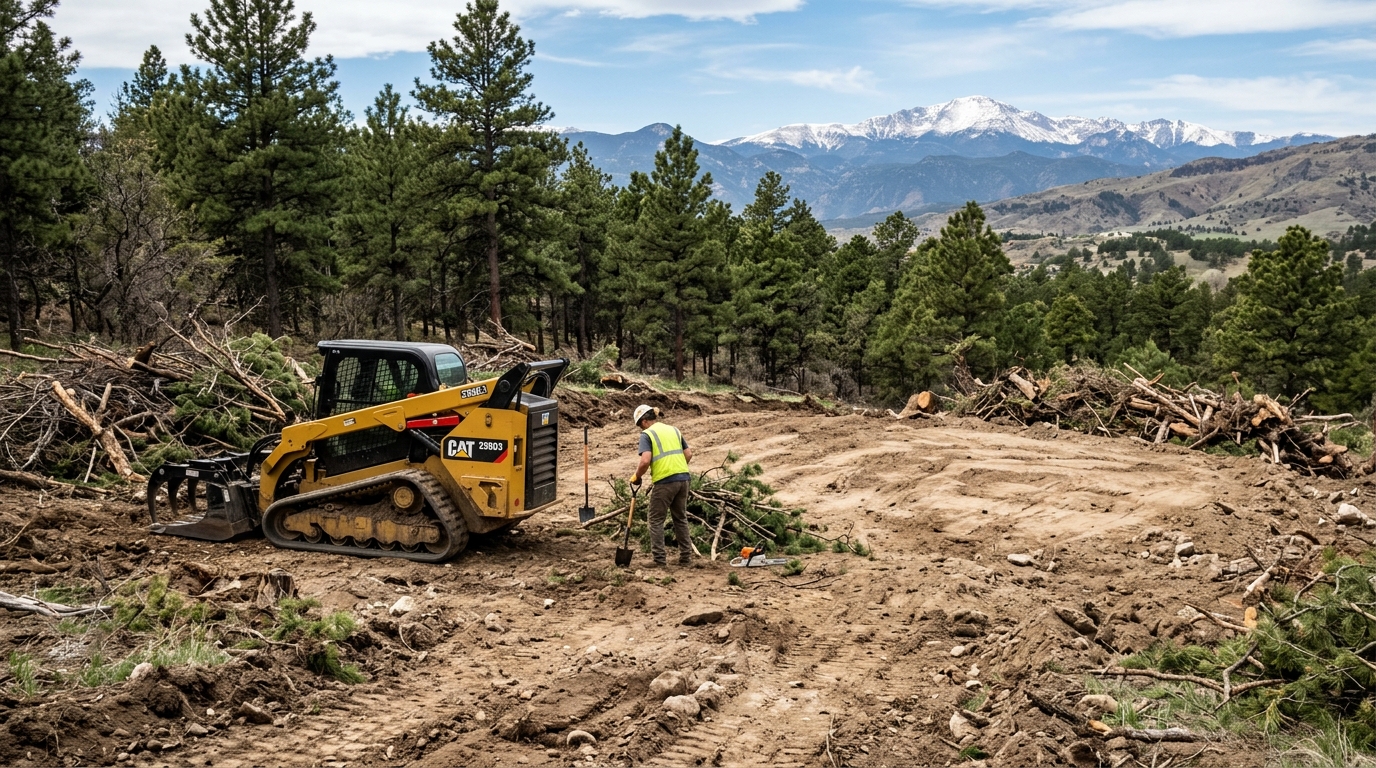
You've got a lot that needs to be cleared before you can build, grade, or sell, and you want to know what that job actually involves before anyone quotes you a number. Land clearing is the removal of everything on and just under the surface that stands in the way of construction: trees, brush, stumps, root systems, old fencing, buried slabs, and debris, finished to a condition the next phase can work with. At Imperium Outdoor Services we run clearing and the excavation that usually follows it as one in-house crew, veteran-owned and owner-operated by Devin, so you're not stitching together a brush company and a dirt contractor on the same site. Here's the part most explainers skip: on the Colorado Front Range, clearing is rarely the whole job, and the order you do the work in moves the price more than the acreage does.
What land clearing actually is (and what it is not)
Land clearing is surface work. It removes standing vegetation and obstructions down to the dirt so a lot can be surveyed, graded, or built on. It does not reshape the ground itself. The moment you start cutting below grade for a foundation, a trench, or drainage, you've moved into excavation, which is a separate scope with different equipment and sequencing. Plenty of property owners treat the two as one line item and then get surprised when the "clearing" quote doesn't include the dirt work the build actually needs. On most real projects you need both, in order. We cover that full sequence on our land clearing and excavation page, because clearing a lot and leaving it is rarely what gets a project to the next trade.
The phases of a land clearing job, step by step
No two Front Range parcels run identical, but the sequence is the same every time. Skipping a phase or running them out of order is the single most common way a "simple" lot clear turns into a two-mobilization job.
- Site survey and walk. Someone stands on the dirt and reads it: property lines, slope, tree and brush density, access, buried utilities, drainage features, and anything hiding under the overgrowth. This is also when hazards and permit triggers get flagged. Devin does this walk in person, because a phone quote on a lot you haven't seen is a guess, not a price.
- Brush and tree removal. Standing vegetation comes down first. Light scrub and saplings get mulched or cut; larger trees get felled and sectioned. On lot-scale work this ties directly into tree and stump removal, so the debris is handled by the same crew rather than left in a pile.
- Stump and root grubbing. Stumps don't just get cut flush, they get grubbed out, roots and all. Leaving root balls in the ground is how grade readings go wrong later and how a slab ends up sitting over a void that rots out and settles.
- Debris handling and haul-off. Cut material, stumps, old fencing, and buried junk get loaded and removed, or mulched and spread where that makes sense. Haul-off distance is a real cost line, not a rounding error, which is why it shows up again in the cost section below.
- Grading-ready finish. The lot gets left in a clean, workable condition so the next phase, usually the earthwork phase that follows clearing, can start without a second crew having to re-clean the site first.
What equipment land clearing takes
The machines are matched to the lot, not the other way around. A flat suburban parcel with light scrub needs different iron than a wooded hillside lot in Jefferson County with clay-heavy soil and rock. In practice, a clearing job pulls from a short list.
- Track skid steers for brush clearing, mulching, and working tight residential access.
- Excavators for grubbing stumps, removing buried slabs, and the trenching and cut-and-fill that come once you move into excavation.
- Dozers for bulk clearing and pushing material on larger multi-acre sites.
- Dump trucks and trailers for hauling debris and spoil off the property.
Because our equipment is staged locally in the Denver metro and not shipped in from another county, mobilization is fast and you're not paying long-haul transport padding on the invoice. That matters most when a project window opens and the dirt work behind it is waiting on a cleared lot.
Land clearing vs. excavation: why the difference costs you money
This is the distinction that trips up budgets. Clearing is surface removal. Excavation is reshaping the ground below grade. Try to excavate through standing brush and intact root systems and you'll pay for it twice: roots wrap equipment, buried stumps throw grade readings off, and dense vegetation hides the exact drainage lines and property corners you need to excavate accurately. The correct order is clear first, then excavate. Running both under one Imperium contract means there's no second mobilization charge and no two-week gap waiting on a separate excavation sub to show up.
What drives land clearing cost on the Front Range
There's no honest flat per-acre rate for land clearing, and anyone who gives you one over the phone is guessing. The variables are too wide, and on Colorado's terrain they swing hard. These are the factors that actually move the number.
- Acreage. More ground is more machine time, but it's rarely the biggest driver on a Front Range lot.
- Tree and brush density. A lot with heavy, large-diameter tree cover is a different job than light scrub, even at the same acreage.
- Slope. Hillside lots need careful cut-and-fill sequencing to stay stable while clearing. A steep parcel can run two to three times longer than a flat lot of the same size.
- Soil and what's under the surface. Expansive clay through the south and west metro and rock outcroppings on foothill lots change how hard the ground fights the machines, and how much excavation a cleared site actually needs.
- Haul-off distance. Debris and spoil have to go somewhere. How far they travel to a disposal site is a real cost line.
That's the whole reason we walk every site before pricing it. A free on-site estimate is the only way to turn those variables into a number that holds up once equipment is on the ground. We work clearing and excavation across land clearing across the Denver metro and the wider Front Range, from residential lots in Denver to multi-acre parcels in Jefferson, Arapahoe, and Douglas counties.
When land clearing is not the right call yet
Honest version: you don't always need a clearing crew. If you're pulling a single rotted deck, a short run of wood fence with no concrete footings, or a few saplings on flat ground, that's a weekend with a saw and a trailer, not a reason to mobilize machines. Where it stops being a DIY job is any lot with mature trees, stumps that need grubbing, buried slabs, slope, or a footprint big enough that renting heavy iron for one afternoon costs more in damage and dump fees than it saves. We'll also tell you plainly when a simple grading pass solves your problem and a full clearing scope doesn't. If a smaller operation does the job, that's what we'll put on the estimate.
Land clearing questions we get asked most
How long does land clearing take?
A light, flat residential lot can clear in a day. A densely wooded or sloped parcel with heavy stumps and significant haul-off can run several days, and that's before any excavation behind it. The honest answer is that timeline tracks the same variables that drive cost: density, slope, soil, and distance to disposal. Because we run clearing and excavation as one crew, we schedule them as a continuous project so the lot doesn't sit idle between phases.
Do I need a permit to clear my own land?
Colorado has no blanket statewide requirement, but local jurisdictions vary. Some counties require grading permits for earthwork over a certain volume, HOA-governed properties often carry their own clearing restrictions, and lots near waterways can trigger state stormwater rules. We don't pull permits for you, but we'll tell you what your jurisdiction typically requires during the site walk so you're not caught off guard. Ask before you schedule.
Is land clearing the same as excavation?
No. Clearing removes surface material: trees, brush, stumps, and debris. Excavation reshapes the ground below grade for foundations, drainage, and utility trenches. Most projects need both, in sequence, and treating them as one scope is how a phase gets underbid or skipped.
Ready to find out what your lot needs?
Land clearing is the first move on most site prep, and getting the sequence right, clear first, then excavate, under one crew is where Front Range owners save real days and real dollars. Imperium Outdoor Services handles the full scope in-house, from the first chainsaw pass to a graded-ready finish, with no phases subcontracted out. Call Devin at (303) 505-0976 or request a free on-site estimate, and we'll come look before we quote.